Thursday, December 1, 2011


Wednesday, October 19, 2011
Where da cash at, featuring Ed Towns and Lil' Wayne
Congressman Ed Towns released his first campaign commercial— which is also coincidentally a fundraising appeal, sent on the heels of a Reid Pillifant Capital New York report that he has $11,240 on hand.
Wednesday, October 5, 2011
Community Board 1: OSA Moves Out

What the f—k Community Board 1? Where the f— are you? It's 6:30 pm and there's barely anyone here tonight. Chairman Chris has to wait a few minutes until there are enough people (19) to proceed with public session.
I have one other note before we begin. A relative of Greenpoint attorney Adam Perlmutter's won the Nobel Prize for physics on Monday. Adam won't tell me how he's related to the Cal Tech professor. Anyone have any ideas?
6:35 PM: District Manager Gerry Esposito takes the roll and Chairman Chris wishes everyone happy Rosh Hashanah. Also, Esteban Duran is now a father. Also, I am enjoying a momofuku candy bar pie that is outstanding. So that's three mazel tovs.
We're onto sidewalk applications. Fabianne's Cafe and Pastry on N. Fifth and Bedford wants to renew its sidewalk cafe license. Up next is Clem's' James Freeman who wants to renew and wish everyone a happy Rosh Hashanah. This is going to be a trend tonight.
6:41 PM: And now a street renaming. The last one was Charno's Way on Manhattan Avenue. Now Humboldt and Greenpoint could become "Cosimo's Way," named after Cosimo Damiano Tristani, founder of Rapid Recycling Waste. His friend, Andre Aviles, of Rapid Processing, takes the mic.
"This man was a pillar of Williamsburg and Greenpoint. This man loved his community and loved the people he employed and this neighborhood as well."
6:45 PM: And some breaking news for you.
The uproarious waterfront concerts will be moved from East River Park to 50 Kent, a former sanitation garage, surrounded by industrial factories. Thayer reads from her notes.
"It is an underutilized nyc parks deparmtent property that will become part of Bushiwck Inlet Park. We look forward to hearing your feedback about this potential location."
Unsurprisingly, there are many questions. I'll summarize
Open Space Alliance's move does not have anything to do with Town Square, which must continue to negotiate with the state to have children's movie nights at the park.
The project is ready to go but it requires "site reparation."
It has no grass, it is simply a concrete asphalt parking lot.
Thayer: "There's no reason to think it couldn't be ready. We've been through this several times, it has been neglected for decades, and could be acclimated for public use.
Yes, this is the third location change over the past two years
More Thayer: "We've done everything possible to be responsive to our neighbors. We reduced sound checks later, reduced capacity rerouted exit strategy. We are here to engage the community, make this the best possible experience for everybody.
A N. Eighth Street resident named Peter asks if garbage collection will continue.
"People going to and from the concerts are still going to ruin the neighborhoods. And we're still going to hear the noise whether it's two blocks away or five blocks away."
Thayer adds that the concert series wil be able to redistribute more money to city parks since it OSA longer has to pay to use the state-owned East River State Park and a public hearing will be held on Oct 20, 6:30 pm, right here at Swinging Sixties, 211 Ainslie Street.
7:01 PM: The board moves onto liquor licenses while Rich Calder and I follow-up with Stephanie outside. Steph answers more questions.
Back inside, Heather Roslund has grabbed the mic to summarize her land use committee. There's an RFP for 339 Berry Street for some housing, the new tenant of 259 Banker Street, artist Matthew Jackson, is inviting board members for a tour, and there are some new variances to push stalled construction sites to clean up so that people don't get hurt in the wake of a bicycle fatality on Bushwick and Powers.

7:16 PM: It's Mieszko time! Our public safety chairman reads off the list of 30 or so liquor licenses‚ and they get approved. And here they are:
ABV Unlimited LLC, 594 Union Avenue (new, liquor, bar)
Andrew Benedict, 429 Graham Avenue (new, liquor, bar)
Chimu Inc., 482 Union Avenue (renewal, beer/wine, rest)
Douglas Park, dba GNOSH, 277 Graham Avenue (transfer, liquor, bar)
Fernando Flores, 742 Driggs Avenue (new, liquor, rest)
Fornino Corp dba Fornino, 187 Bedford Avenue (renewal, beer/wine, rest)
Irena Kabala dba Capri Social Club Inc, 156 Calyer Street (renewal, liquor, bar)
Jeffrey Slagg Enterprises LLC dba Sol de Mar (renewal, beer/wine, rest)
Mikey’s Hookup II dba PIPS, 158 Roebling Street (new, beer/wine, bar)
Mivako Japanese Rest Corp, 143 Berry Street (renewal, beer/wine, rest)
Mountaintop Restaurant Group dba Dunham Place Restaurant, 29 Dunham Place (new, liquor, rest)
North 12th Restaurant Company LLC dba T.B.D., 74 Wythe Avenue (new, liquor, rest)
Paper Box Music & Art Inc, 17 Meadow Street (new, liquor, bar)
Peanut Industries Inc dba Velvet Lounge, 174 Broadway (renewal, liquor, bar)
Pig and Egg LLC dba Egg Restaurant, 135 North 5th Street, Store A (renewal, beer/wine, rest)
Plimsoll Mask LLC, 138 Havemeyer Street (new, liquor, bar)
Radegast Hall LLC dba Radegast Hall and Biergarten, 113-115 North 3rd St aka 186 Berry Street (renewal, liquor, rest)
Spike Hill LLC, 184 Bedford Avenue (renewal, liquor, bar)
Studio 299, LLC, 299 VanderVoort Avenue (new, liquor, bar)
The 709 Lorimer St Restaurant Corp dba Pete’s Candy Store, 709 Lorimer Street (renewal, liquor, bar)
The Inspire Company, LLC dba Chai Home Kitchen, 124 North 6th Street (renewal, liquor, rest)
Wow Bridge CafeLLC dba Wow Cafe, 168 Borinquen Plaza aka 335 South 2nd Street (renewal, liquor, bar)
7:28 PM: Transpo chair Karen Nieves runs through the transportation report, which includes the DOT's suggestion to take 50 parking spaces from Greenpoint Avenue to make way for the bike lane.
Karen is not in favor of this, arguing that drivers will see the same effect that they have at Kent Avenue.
"Taking away parking spaces is not the answer," says Karen, adding, "That's why I'm not approving this."
She has more:
"They're saying this is a done deal. They are going to install a bike lane on the bridge itself. They are going to narrow and make one lane on each side. Before they even think of installing a bike lane on the bridge we need to deal with the issues on Greenpoint Avenue."
We have a proposal for a letter of support asking to say no to 50 parking spaces, and the board supports it.
Karen moves onto the inundation of film crews shooting in Greenpoint and Williamsburg. Karen says the traffic cones blocking parking spaces are a real problem, she wants productions to meet with the board ahead of time to inform them about where they're shooting, and productions should consider shuttling employees to the shooting site so that they don't park in the neighborhood.
A frustrated Mieszko adds: Tell them to go back to Hollywood where they belong. You don't belong here."
7:51 PM: And more breaking news: Sarah Palin is not running for president and Steve Jobs just died.
7:53 PM: That's it for committee reports. Public session! I'll summarize
*Christine Murray says the board should turn down The Charleston's sidewalk cafe.
*Susan Fenston says she hope everyone has seen her "Widespread Panic" video, and she doesn't like the "despicable," "heinous" messages she received from people who support the concerts.
"Moving them a couple of blocks may alleviate a couple of problems, but you can guarantee we will be here again to speak about the concerts. We live here. Our voices do matter."
*Jackie Mayer thanks the board on its hard work and said that Taste of Williamsburg was the most incredible event she's attended in New York City.
*John Rico says it is encouraging that Open Space Alliance is reasonable and they accommodated complaints, but adds his concern about public-private partnerships.
"I still am baffled why we have a Parks Department that can't run its own business. What's next, are we going to have private police? What's going to become of this whole thing? OSA is great and what they do is nice, but why?"
Also, the Monitor Museum, I hope that's something that we can work together on."
*Another resident is opposed to the Charleston Bar's application, and complains that they leave their door and windows open. "It's noisy, it's loud and it's a disaster for the community."
8:04 PM: And that's it. Board member Simon Weiser stops by press row to weigh in on those Hasidic signs on Bedford Avenue which order women to move to the side of the street when a man is walking. Simon doesn't think the signs should have been bolted to street trees because they damage them. And that's our Good Call of the week! L'Shanah Tovah — and move it along people.

Wednesday, September 21, 2011
Whip-it good

Users of the popular drug known as whip-its say the experience is better than getting in the ring with Ellen Page and Drew Barrymore.
Every year, usually, there's one new weird new drug trend in North Brooklyn.
Remember that "hot kielbasa" bust, where Polish deli workers were caught stuffing cocaine into sausage casings? That was 2008.
Or the "hot tub drug machine" at the former site of the Laila Lounge on N. Seventh Street, where police found 18 kilos of cocaine hidden under a sauna? 2009.
And "Operation Lude Behavior"— the quaalude factory on Kent Street in Greepoint? April of last year.
One would think that the city's first bath salts drug bust which occurred this June would have been our high mark for the year.
But that is not the case— thanks to the spread of nitrous-fueled bros getting high on laughing gas after a Widespread Panic concert this weekend.
This problem is no laughing matter.
And now it looks like local leader are springing into action, according to the internets listservs, but until the police crack down on users and figure out who the sellers are, we could see this drug habit crop up again.
Wednesday, September 14, 2011
Community Board 1: We're back beaches

After struggling against an overpowering ennui that has the strength of a thousand Russian autocrats, I have come up for air just in time for tonight's Community Board 1 meeting at the Swinging Sixties Senior Center.
What can I say, it's been an eventful and adventurous summer.
*I fought off a diminished Category 1 hurricane so much that it became a tropical storm.
*I tweeted crotch pictures of the finger building— which is now available for occupancy.
*I single handedly married 76 gay couples on the steps on Borough Hall as an ordained minister with the Church of Universal Life.
*I sailed Newtown Creek with Dewey Thompson and kayaked on the East River with Councilman Steve Levin.

But enough about me let's get to tonight's agenda. New York Shitty's Miss Heather promises lots of angry new sh-t from residents tonight, specifically about a rampant rat problem in Greenpoint. I can't wait.
6:30 PM: Chairman Chris Olechowski calls the meeting to order (On time!) and District Manager Gerry Esposito takes roll.

Borough President's counsel the ruggedly handsome Jason Otano stops by press row to mention that he is now officially single. Ladies?
First up is a sidewalk cafe application for the Alligator Lounge on Metropolitan Avenue just down the street from the center. But Board member Tom Burrows has a complaint about noise at the bar. He's not the only one as Katie Naplatarski and Julie Lawrence chime in.
Lots of attractive young people here tonight for a number of disparate reasons, but Chairman Chris says that audience members who are here for liquor license moratorium issues will be disappointed because that meeting is happening in two weeks. There is no visible reaction from the audience at this remark.
Board member Del Teague gives a brief budget report presentation, explaining that members should carefully consider their funding priorities to be given to the city. She keeps talking.
"You could come to the budget meeting," said Del. "It's not the most exciting meeting. It's long and we go through the whole thing. We go through every single item. We may be there until 2 in the morning, but we'll do it."
The Dominotrix herself Susan Pollock and Barbara "Yogi" Baer enter the room and stop by the press table to complain that I haven't been blogging that much lately. Ladies, take a number.

6:54 Chairman Chris makes a motion to withdraw the Polish Slavic Center Cafeteria's liquor license application because of a "fraudulent petition" and found that by consulting a forensic expert. What a joke. Now he's asking the board to ratify the withdrawal.
Meanwhile, keeps talking but Public Safety deputy chairman Tom Burrows is whispering that he's livid the state approved a law allowing movie theaters to serve alcohol during a screening.
7:02 PM Greenline legendary editor Greg Hanlon arrived just in time to help Open Space Alliance's Julia Morrow with her fantasy football team. His advice for her defense? The Detroit Lions.
7:07 PM: Board members vote for the Polish Slavic cafeteria withdrawal so no zwyiec with your pierogis.

Transportation chairwoman Karen Nieves gives a summary of three issues including demapping on Union Street, a Department of Transportation Safe Streets for Seniors.
And Karen notes that the city is denying walk signals on Kent Avenue by N. Eighth near the East River park entrance and N. Fifth Street. Karen is defiant and says she had to direct traffic herself while her family went to the kite festival.
"They cannot tell us there is not an increase in pedestrian traffic in those areas."
Otano gets called on and announces that the Brooklyn Book Festival will occur at Borough Hall all day Sunday, and you can pick up a copy of Chairman Chris' new memoir, "Kill Me If You Can," which is a New York Times Bestseller.
7:24 Public session! I'll summarize.
*Tom Peyton announces the return of the Bring to Light Festival in Greenpoint. Sounds like there are a lot of kinks to iron out before it opens, such as final confirmation on permits.
*Mark Wysocki who opposed the PSC liquor license takes a victory lap.
*Jeanette Mocho has a rat problem. She's caught 16 rats over the past two years and she's started a petition with 400 people distributed in both Spanish and Polish.
"Now sanitation is giving out holes in the cans but doing nothing about the rat problem."
*District Leader Linda Minucci echoes the call to exterminate rats on Calyer Street.
"If they find evidence of holes, they ticket the homeowner."
*Julia Morrow gives a presentation regarding the Open Space Alliance events. Chairman Chris calls her Julie.

7:46 Chairman Chris brings up new business and Public Safety Chairman Mieszko Kalita has more questions about the bring to light festival. Looks like Mieszko has some problems with it.
Ward Dennis reminds people to come get a taste — of Williamsburg— at the Taste of Williamsburg Sunday afternoon.
Tom Burrows makes his frustration about Nitehawk Cinemas' sneaky liquor license extension public and calls out Assemblyman Joe Lentol for sponsoring the bill. Tom, let's settle this over a drink while watching your favorite movie.
7:58 PM: Rami Metal from Steve Levin's office notes a rally against homeless shelters coming to Greenpoint and other neighborhoods at city hall on Sept. 21 at 11 am.
Antonio Reynoso from Diana Reyna's office makes an appearance and Jose Leon thanks Antonio for getting an iHop to open in the district, which means we can look forward to a whole lot of this:
Hey, let's end this with two fun facts of the night: Did you know that board member Wilfredo Florentino is an ex-military officer specializing in nuclear, biological and chemical weapons (NBC for short)? He knows how to use an ICAN, an improvised chemical agent monitor. And Mieszko spent his summer hanging out with some very powerful people.

If you look closely enough, you can see Mieszko piloting the vessel as former Prime Minister Putin aims at a whale with his crossbow.
Tuesday, August 9, 2011
Dear Williamsburg...
I think I need a break from you.
We had a good run. A lot of laughs. A lot of four-hour community board meetings. But we're just going in two different directions. You're a train heading west, I'm a train heading east. You're increasing your annual median income and I'm... well... still broke.
It'll work out. I'm sure of it. So let's spend some time apart, at least for the rest of the summer.
Tuesday, June 14, 2011
Epic post coming
I will be at tonight's CB1 meeting in spirit only. But that doesn't mean we can't have an epic CB1 season-ending post.
Facial hair Hall of Famer and Brooklyn Great Name all-star Jack Hammer is headlining this weak agenda tonight, so I'm encouraging board members to take some crazy photos of each other and send them to aaronmshort@yahoo so I can properly record your meeting.
Thursday, May 12, 2011
Tish James Senior Cuts Press Conference
It's CSCS Advocacy Day at City Hall and Councilwoman Letitia James will not tolerate senior cuts.
Tuesday, May 10, 2011
Community Board 1: OSA Defends its Relevance

It's a big night for Chairman Chris-- can he keep it under four hours?
Tonight's meeting is teeming with agenda items. Yet less than half the board is here. Is it Lag B'Omer? Someone's wedding? Court get out late?
Not a lot of press here today, save Miss Heather and a photographer with an impressive straw hat and a press card and yes, the New York Times who is here to cover the debate
 over concerts at East River State Park.
There are a few other items to track, including that pesky Polish Slavic Center liquor license (even its opponents seem resigned to it being passed). And Jason Otano's suave-looking tan, which rivals even Julia Morrow's epic Texas tan. Looking seductive-cherubic, aka seducherubic, Jason!
6:33 PM: The first of a record five presentations is about the Humboldt Street Plaza program. Emily Wisenhof, one of my favorite Department of Transportation planners gives an update. Oh heck, they're all my favorites!

But tonight belongs to Bushwick's most beloved artist, Austin Thomas, who is presenting her new "perches" which will grace the plaza next year. Pedestrians will be able to view the neighborhood and relax on the perches.
The Department of Design and Construction's Nitin Patel (of Monitor Street stoop notoriety) takes the mic to announce the beginning of an 18-month process to redesign West Street between Eagle and Clay Streets at $8.5 million in federal funds plus another $1.5 million for the design. It's one of the worst streets in Greenpoint due to heavy truck traffic.
So far, there haven't been any workshops about this, and Barbara Vitell is pissed.

And Chairman Chris admonishes both planners for having nothing prepared despite sending letters that the construction would begin soon, and essentially wasting everyone's time.
"We are perfectly willing to come back when we have something more concrete," says one of the planners.
6:55 PM: Item three is sidewalk cafes, and we're starting with Zebulon on Wythe Avenue. There's also famed bartender Joel Lee Kulp from The Richardson, for a renewal on Graham Avenue. He's one of the most talented bartenders in the neighborhood, really more of an artist.
There are three others, including Urban Rustic at 318 Grand Street, Jemanya at 57 S. Fifth Street, and Nlam on 178 Kent Avenue-- which has been delayed due to its owner's financial troubles.
Board members are slamming the last one due to a lot of issues with its owners and permits.

Now the fourth item, Jorge Bosch from the Williamsburg Savings Bank updates the building's conversion to a banquet hall with a long presentation about restoring one of the city's oldest landmarks to its former glory.
There are questions about development regarding the demolished back lot near Bedford Avenue, where there will be two levels of underground parking but other plans are unclear.
Heather Roslund says the land use committee will vote on a minor change relating to the bank building in the back of the room, which is her excuse for ducking out of the rest of the meeting.
Finally, Laura Hofmann from Outrage talks about a truck traffic survey that the organization complied.
Uh oh. David Dubrosz reads through the entire study and Chairman Chris cuts him off twice.
Laura brings it all back home with the air particle study. The big takeaway here? Don't breathe if you're walking through Williamsburg, especially near the Brooklyn Queens Expressway. I don't know any good pop songs about polluted air, so here's Drive By Truckers.
7:34 PM Here's what we've been waiting for. OSA's Adam Perlmutter on the East River State Park concerts.
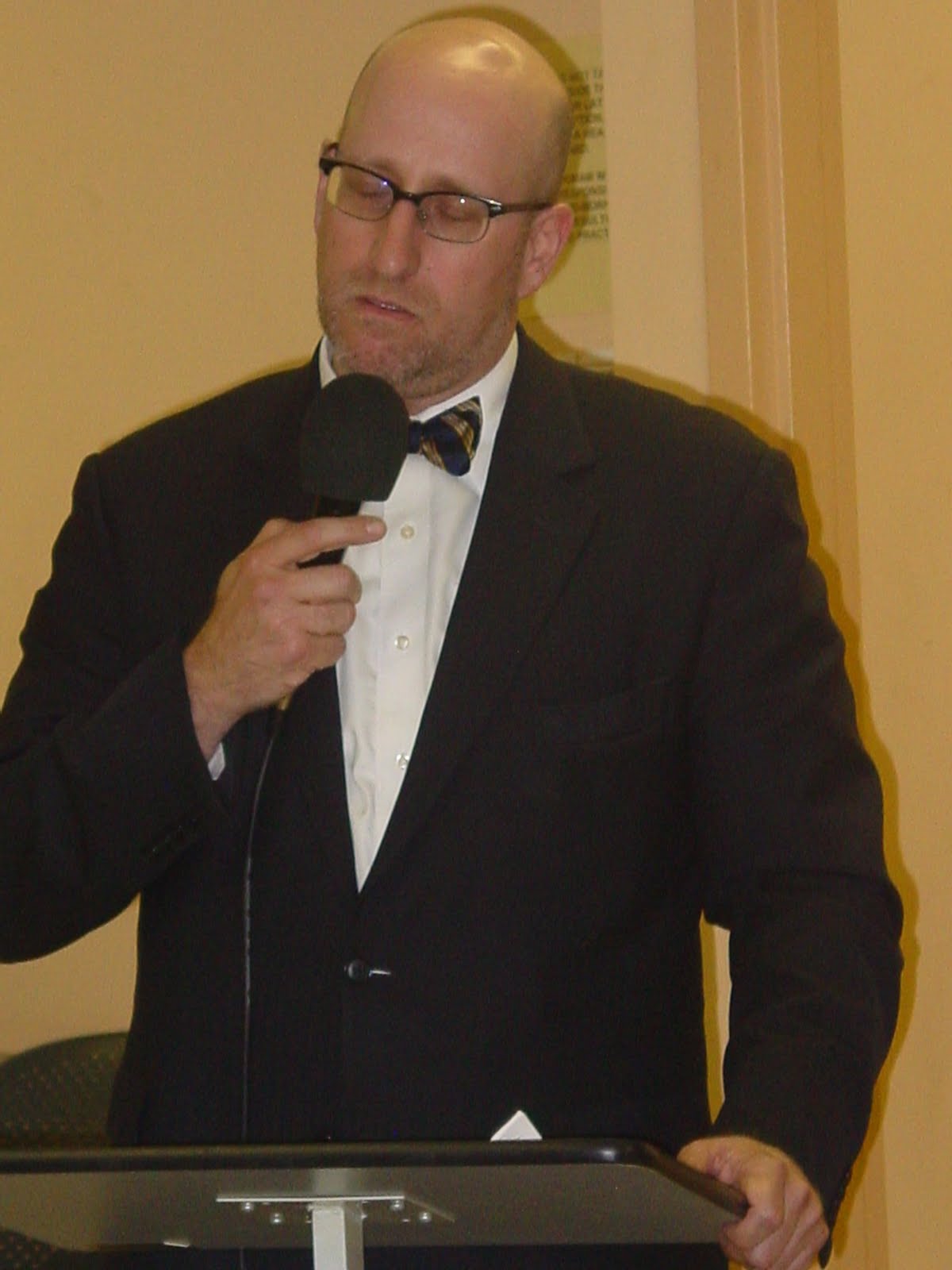
"Last summer we were forced into a relationship with a concert promoter that we did not want to work with, that routinely violated sound and decibel limits.
The Parks Committee wants 10 concerts. There were 22 last summer. Now there are 15, 10 paid and 5 free. Of the free concerts, there is a comedy show and a jazz program.
We reduced our capacity 15 percent from last year from 7500 to 6500.
We're working with the 94 to greatly improve crowd control. When the concerts let out they let out into residential blocks on sixth, seventh and eighth streets. We're trying to divert the crowd to more industrial and commercial streets."
Adam explains that there won't be concerts on July and August and sums it up:
"We do realize there have been problems. We apologize for them.
On our end, we are going to be presenting to the community board what we do, what improvements we are making. Frankly that's our fault. We've made a mistake on that. We have to work hand in hand with the board and we'll continue to do that."

The defense rests. Wow, that was the most regretful speech I've ever heard at a Community Board 1 meeting. Adam apologized for everything except Jane Pool's pants.
There are questions about lowering decibel levels and giving an all access pass to the community board. Chairman Chris should snatch this up. It makes sense.

Rob Solano asks about Latino programing and Stephanie Thayer said that she'd love to do a Central Park Summer Stage-type lineup of diversity.
Adam adds "we want to reduce the amount of concerts and increase the amount of family and children programing."
Del Teague says that promoters must hear concerns about decibel levels and one of them, Sam Kinken, says that he regulates his sound checks as tightly as possible and if he must push sound checks later in the day, he'll do that.
"We're trying to do everything we can to minimize the overall impact while not diminishing fundraising for Open Space Alliance and for parks," said Sam.
 7:54 PM: We're into an abbreviated public session, where five Polish Slavic Center members are speaking in opposition to the center cafeteria's beer and wine license. They're upset that the center, a nonprofit organization, is serving alcohol, even though there are many kids in the center and its cafeteria. Also, there's an internal feud that has been simmering in the community for more than a decade. Meanwhile board mascot Mieszko Kalita loses interest.
8:00 PM: Chairman Chris interrupts the session for nominations for the board' s executive leadership. The Polish opposition takes their collective seats. Nobody is challenging Chris or any of the other vice chairs, so this moves quickly.
8:04 PM: The Polish opposition is back up, led by Mark Wysocki, who is arguing that 150 people are opposing the liquor license and that the center is a nonprofit. He also argues that the center could find other ways of raising money instead of selling beer. Like, say, promoting concerts in public parks?
8:16 PM: Now it's the Graham Avenue residents who are opposed to 373 Graham Avenue, a restaurant from the guy who opened Moto.
Lucille Bergamo says the building has had issues of permit problems, concerns over its fire codes and says the building owner has not communicated well neighbors.
Now we have a group of residents against the bar coming into 229 Kent Avenue, a new bar from Joel Lee Karp, who owns The Richardson. One says that the block is a very residential part of Kent Avenue, with many homeowners and a bar open to 4 am is out of place there.
"This is a very beautiful block in Williamsburg and it would be a shame to be desecrated by the greedy needs for one smug bar owner," says one resident.
8:28 PM: Now we've got some Open Space Alliance committee members, led by Laura Hofmann (the very same from OUTRAGE. Laura's busy dudes.)
One resident questions where OSA is on the Monitor Museum site on Quay near West. She's worried that the property could be seized by eminent domain and she's worried it could be quashed.
Laura references a New York Shitty post about last week's OSA meeting, and she's still pissed about a large rock concert booked at Barge Park last year sponsored by "Fuck Duck."
"Besides the name, the lyrics and the pot smoking... people should know better. We've fought to avoid this in our playgrounds."

The eloquent John Ricco, from Grandma Rose's, asks for a "table pound" from the thousands of residents near East River State Park. He gets it.
"These concerts bring a lot of undesirables to that area. If the sound levels can be lowered, I'd like to believe [Open Space Alliance], I hope we can work to alleviate the stress that has resulted.
Please do not take this lightly ever again, We will not be brushed off like dandruff. We have big brains, and big mouths."
8:36 PM: Public Session closed and second roll call. Let's go to Chairman Chris for his report:
"The public safety committee is going to become the centerpiece of the board."
Chairman Chris adds that the executive committee will give moratorium recommendations to the public safety committee and he expects the committee to look at it next month. But then he chides board members for not going to other committee meetings.
8:41 Committee reports. Public Safety. You know what that means. Hit it Doda!
Public Safety chairman Mieszko Kalita wants to thank everyone for attending last week's four and a half hour meeting-- that's an unofficial committee record and only half as long as Heather Roslund's reading of Moby Dick.
Mieszko starts with the sidewalk cafes, including the Meatball Shop. Approved.

Aaaaaand here's the Polish Slavic Center Cafeteria license. Mieszko gives the run-down.
"There are 300 people fighting and 40,000 don't know anything about it," said Mieszko.
Board member Katie Naplatarski says she wants to vote with the majority but she is confused and has more questions.
I have to say, I'm disappointed with Mieszko's performance tonight. He isn't explaining the issue that clearly and he's skirting around details. It's an off night for the M-dawg.
Chairman Chris is adding a stipulation that beer and wine can only be served with meals-- or the center could lose its license. So far, Chairman Chris is in clearly lead for the meeting's MVP for trying in vain to keep a very busy meeting moving. I will now play in traffic on Metropolitan Avenue.
Polish Slavic Center's liquor license passes 27-5. But 229 Kent gets denied, as does 373 Graham Avenue and a troublesome rooftop bar/ lounge, Mercat Negre, on 68 Grand Street.
All of the liquor license renewals get approved.
Mieszko has a funny item about Club Europa, where the SLA thought it was a bank instead of a bar and issued a bunch of citations. I better follow-up.
And Thai Tai corporation, which had some early questions from the board, is sailing right through, so a new Japanese place is coming to the Morgan area.
Mieszko ends with a summary of the moratorium.
9:24 PM Parks Committee Chairman Phil Capanegro summarizes the concerts issue and brings the resolution to limit concerts and reduce capacity to a vote.
Board member Ward Dennis has a question, mulling whether the resolution should be tabled, but then tables his recommendation in favor of more discussion. Also, the meeting just crossed the three hour mark. One more to tie a record.
Board members Katie Naplatarski wants a cell phone contact from OSA to call on the day of the concert and Julie Lawrence asks OSA to create a task force to address issues going forward. OSA's Stephanie Thayer has sunk into her seat in a corner behind Ward, while Adam has spent much of the last half hour in the hallway working over the rabbis.
Ward makes a friendly amendment to take out the numbers of concert, but add a task force to monitor... I mean liaison... no, wait, it's monitor OSA. It carries.
9:35 PM: Transportation Committee, Karen Nieves, notes the city will begin it sNassau Avenue Construction in two months and a Greenpoint Avenue bike lane meeting will be held Thursday.
Land Use's Heather Roslund has a quick report on three land use items, including a martial arts gym on N. Seventh and the Williamsburgh Savings Bank. The items pass.
Environmental Committee's Ryan Kuonen gives a shout out to OUTRAGE and notes a street cleaning initiative to clean up the northside on the weekends.
9:51 PM More public session. I'll summarize.
*A resident representing 300 people on Berry Street is opposing the commercial overlay at N. Eighth and Berry Street. Instead, she says Teddy's should have a variance for its five tables but she doesn't like the bid to "develop" the corner of the neighborhood.
Another resident adds: "We don't want Berry Street to become Bedford Avenue."
*Joseph Garber is up and he gets a mock ovation. I think it's a mock. I can't tell. People may just be happy because when Garber talks, it's near the end of the meeting. Miss Heather perks up and starts filming Joe talking very quickly about the Mayor's budget and the Public Safety Committee's gross negligence of not recording his attendance even though he was there. Also, he's trying to get more garbage cans on Marcy and Havemeyer.
Garber finishes and gets another mock ovation. And then he keeps talking.
*Rabbi Niederman wants to remind people of the excruciating cuts to day care centers.
*Tish Cianciotta says she supports the new liquor license at 299 Graham Avenue, but does not want tables outside.
*Leah Ayber, legislative assistant for Assemblyman Lopez, introduces herself that she's the new Williamsburg rep for the neighborhood. She waited nearly four hours for that.
*Finally, Rami Metal notes that the 400 McGuinness rally is rescheduled for May 22 at 2.
Motion to adjourn. And we're done. Goodnight and Sto Lat!
Monday, May 2, 2011

Thursday, April 28, 2011
Hasidic shoe stores
Passover is over, but this remains my favorite South Williamsburg story I've read.
Tuesday, April 26, 2011
Press Release of the Week: DEP Boot Camp
This is what sewage plant workers must "voluntarily go through today. Be gentle on Jimmy Pynn! He bruises easily.
Environmental Protection Commissioner Cas Holloway today kicked off the 24th Annual Operations Challenge competition, a test of skill and speed for teams of sewage treatment workers who compete in timed events for the chance to represent DEP at the New York State and national competitions that take place later this year. Four DEP teams will compete in various tasks, including fixing a pipe, repairing a pump, and rescuing an injured employee. The two winning teams will represent New York City at the State competition to be held in May at Lake George. This year’s morning-long event was held at the Owls Head Wastewater Treatment Plant in Brooklyn, and is sponsored by DEP and the Water Environment Federation.
This year’s four competing teams—the Sludge Fellas, the Tide Surfers, the Unknowns, and the Turtle Surfers—hail from the Owls Head, Tallman Island and North River wastewater treatment plants. Each team will compete in five timed events, including:
· Collections: Teams respond to a leaking pipe and repair it while it remains in service.
· Water Quality Testing: Teams perform tests to determine the pollution level in water to see if it meets discharge standards.
· Maintenance: Contestants remove submersible equipment, make the necessary repairs and return it to service.
· Waste Treatment Process: Teams answer multiple choice questions to demonstrate their knowledge of the wastewater treatment process.
· Worker Safety: Teams rescue a dummy in a confined space while checking air quality using safety devices and perform CPR.
The Operations Challenge is an excellent opportunity to showcase safety and training skills while recognizing the work of wastewater treatment operators. The two highest scoring teams will go on to compete in the statewide competition in May. From there, winners of the statewide contest will participate in a national competition in Los Angeles. The Operations Challenge was developed by the Water Environment Federation, the largest professional organization representing the wastewater treatment industry. The event at the Owls Head Wastewater Treatment Plant is sponsored by a local chapter of the organization in conjunction with DEP, which has participated in the Operations Challenge since 1987. A team from DEP has made it to the national competition for 15 straight years
Sunday, April 24, 2011
Thursday, April 21, 2011
Moratorium Madness!: Mieszko gets famous
It's finally happening. Mieszko is slowly becoming a celebrity. I bet this is how Jack Horner felt when Eddie Adams got his first big break.
Wednesday, April 20, 2011
WTF of the Week

This week's WTF of the Week comes courtesy of the Wall Street Journal, which ran a story on the Community Board 1 proposed liquor license moratorium that seems a mirror image of Greg Hanlon's Capital New York survey of the plan which appeared on April 15.
Now, this story has been out there a while, but Greg went to the meeting, made some follow-up calls including one to the State Liquor Authority and wrote it up. The Journal had a similar angle, which 11211 notes too, but that story came out a full week after the meeting happened.
Tuesday, April 19, 2011
Friday, April 15, 2011
Pimp Release of the Week
From the US Attorney' office:
PKC:LMN F.#2010R01709
UNITED STATES DISTRICT COURT EASTERN DISTRICT OF NEW YORK
--------------------------------------X UNITED STATES OF AMERICA
-against-
WILLIAM JOHNSON, also known as “Dolla Bill,” “Dollarz,” and “Dollabillz,”
Defendant.
---------------------------------------X EASTERN DISTRICT OF NEW YORK:
C O M P L A I N T (18 U.S.C. § 1591(a))
LAURA A. SPENCE, being duly sworn, deposes and says that she is a Special Agent of the Federal Bureau of Investigation (“FBI”), duly appointed according to law and acting as such.
Upon information and belief, in or about and between January 2007 and September 2010, both dates being approximate and inclusive, within the Eastern District of New York and elsewhere, the defendant WILLIAM JOHNSON, also known as “Dolla Bill,” “Dollarz,” and “Dollabillz,” did knowingly and intentionally recruit, entice, harbor, transport, provide and obtain by any means a person in and affecting interstate commerce, and did knowingly and intentionally benefit financially from participation in a venture which engaged in such acts, knowing that force, fraud and coercion would be used to cause the person to engage in a commercial sex act, and knowing that the person
2 had not attained the age of 18 years would be caused to engage in
a commercial sex act.
Lessons from Community Board 1

The Community Board 1 resolution on the East River concerts is redactacular.
This week the hipster press discovered Community Board 1. Longtime observers, such as this blog, find it amusing that many colleagues on press row have some difficulty understanding why this civic group does what it does. Let me try to explain them with a few helpful tips.
1. If it sounds like the board voted on something outrageous, chances are it didn't actually happen.
Exhibit A: Banning the East River concerts. That's stupid, you might ask yourself. Why would a community board, which has about as much authority as a sports talk caller, pass a resolution to ban concerts in a state park that generate hundreds of thousands of dollars for the community?
Instead of reading a suggestive headline on the Internets and linking it verbatim (cough Vegan cough), sometimes you need to call a couple of people to verify what actually happened if you weren't there. The blogs got this very wrong this week, so throw some credit Metro's way, and Alison Bowen in particular, for sussing this out.

2. Board members don't always know what they're voting on-- especially since what they vote on gets written up after they vote on it.
In Albany, and just about in any other legislative body, legislators vote on bills that have been written into the record so they know, more or less, what they're voting on.
At the community board, sometimes the opposite happens. Board members vote on a suggestion, or a very strong feeling, to take a stand about something. What exactly? They don't know-- until the board staff writes the resolution up.
So you can imagine one's frustration when you call a board member to ask what he voted on and he says, 'I don't know, call the office.'
3. Sometimes the actual resolution is more confusing than the debate.
Back to Exhibit A. The board's resolution to "request assistance from state and city leaders about the park's permit process"
 (specifically who is issuing the permits, who is securing the permits, has there been a review process, has input been asked, and where is revenue going) doesn't actually make any sense. In fact, it's the job of the District Manager to research these questions and report that information back to the board. Oh, and guess what else. It's all PUBLIC RECORD. You can read about how concerts got to the East River here, here and here.
4. Sometimes the debate on one issue is about something else entirely.
Exhibit B: The liquor license moratorium. It's not about new bars coming to Williamsburg.
 Board members know it's silly to ban new business that bring jobs into the neighborhood and sponsor local events from coming into the neighborhood. It's about increasing enforcement for particularly bad nuisance bars and clubs, and that involves the NYPD, Department of Consumer Affairs, and City Council offices as well as the State Liquor Authority (as Tom Burrows sanely mentioned this week). Board members aren't upset at bars for staying open, they're upset at the drunk people wrecking havoc on the neighborhood after they leave late at night.
5. Sometimes equally significant issues get overshadowed during more frivolous debates.
Exhibit C: Alma Lounge. Everyone has their favorite bar they love
 to hate, such as Studio B (closed) Club Exit (closed), El Retorno (probably closing), and the Production Lounge (who knows), but Alma takes the cake. Daniel Susla got in front of the board Tuesday night to explain that he has had insomnia for a year-- yeah, you read that correctly-- because his illegally-operating basement neighbor blasts dance music. And city agencies are using their molasses-like enforcement strategy to shut it down by-- issuing violations that lead to court hearings that keep getting postponed. Daniel feels trapped. And a moratorium on liquor licenses will do nothing to help his situation.
Wednesday, April 13, 2011
The East River concerts are not banned
Wow, I'll get to the moratorium discussion feedback in a second, but, no, contrary to several reports, Community Board 1 DID NOT vote to ban the East River State Park summer concerts.
The board likely voted to draft a resolution opposing it and all its deleterious effects. That resolution is being drafted this afternoon. If you think it's weird that board members would vote on something before even writing up what they're voting on, you're not the only one.
More shortly.
The board likely voted to draft a resolution opposing it and all its deleterious effects. That resolution is being drafted this afternoon. If you think it's weird that board members would vote on something before even writing up what they're voting on, you're not the only one.
More shortly.
Tuesday, April 12, 2011
Community Board 1: Prohibition Edition

6:15 PM: It's absolutely mobbed tonight. I haven't seen it this crowded since Broadway Triangle. And it's because of the proposed liquor license moratorium on the agenda. Yes, the board will debate banning all new liquor licenses in Williamsburg and Greenpoint. How big a deal is that? The Huffington Post sent PAID videographers to cover it.
So what else are people pissed about? The McGuinness Boulevard homeless shelter, the Polish Slavic Center Cafeteria's liquor license, the city's Greenpoint Hospital development project, the pulsating sound tomb that is Alma Lounge a zoning overlay application on N. Eighth Street, the canceled Brooklyn Night Bazaar, scatalogical concertgoers spewing out of East River State Park during the summer, more garbage, dog sh-t, and David Yassky. Again.
There's also a reporter with New York 1 who is grabbing everyone she can get her hands on-- including Community Board mascot Mieszko Kalita into the back hallway for an interview. Mieszko is going to become an overnight celebrity because of this, just you
 wait.
wait.And finally, Miss Heather and friends have formed the Community Board 1 Ladies Auxiliary because they enjoyed El Rotono. Congratulations ladies!
6:35 PM Chairman Chris takes the mic and we're diving right into the debate... with a BSA application for a new gym and retail store on 272 Driggs Avenue. You can feel the tension in the air.
Next, there's another BSA application for a martial arts studio on 184 N. Eight Street near Bedford Avenue. They're going to turn the old brick warehouse into the fitness studio and the applicant describes his plan as "community-based." He takes five questions. Tension is rising.
Hey it's the Meatball Shop guy! I wrote about him! He wants a small sidewalk cafe on a skinny stretch of Bedford Avenue. Those balls are tasty but I bet there will be some objections to this one.
6:56 PM: David Yassky's up. Chairman Chris asks if he's here yet. He isn't. Sorry David. We're moving on.
6:57: Diane Jackson from Greenpoint Renaissance Enterprise Coalition takes us back before she takes us forward on the Greenpoint Hospital plan.
But she gets right to the group's lawsuit against the city for choosing a rival developer, TNS Great American Construction, to build senior housing on the site:
"We submitted our proposal. It took the city approximately three years to answer proposal. And they said they had a better proposal. They came up with a very weak proposal. The city took this other organization by the hand, walked them throughout he process, helped them make changes to their proposal to make it look like our proposal. We found this out through a FOIL request and we decided to take them to court."
This gets some table banging and moderate applause.
7:05 PM: Chairman Chris: Is Commissioner Yassky here?
There's a faint "yes" in the hallway. David has the floor. He wants to make it legal for livery cabs to pick up passengers in the outer boroughs-- a
 practice that people do already. And that's about it.
Two questions. Rabbi David Niederman thanks David for his service to the neighborhood and asks about opposition to the plan from taxi drivers.
Esteban Duran has his blunt take: "Last time you had a proposal it failed miserably. What type of analytical data have you looked at that provides of this massive policy change? Our neighborhoods are still suffering from cuts, like the B39."
David: "You have to let the market do its thing. We've tried to relax our rules to let commuter vans to replace the bus service... We have super smart people working at TLC. I have full confidence in them. Let the drivers figure out where the passengers are and serve them there, and get rid of rules that prevent this from happening."
Shockingly this is not the end of his remarks. There are more questions and David rambles onwards. Press Row is getting restless. A Brooklyn Eagle reporter continues to juggle all her stuff and
7:32 PM: Chairman Chris introduces liquor licenses to a small wave of groans. But he makes his first MVP move of the year, allowing public session to begin now, before meeting starts. Let's summarize:
Kevin Patrick Linney on 51 Kent: I have a bar in Fort Greene. I got wind about a potential moratorium and like many people here I was concerned about the parameters, which streets, is there a time frame, will there be a risk to open a restaurant for those with a good track record.
Anthony Martin is opposed the Berry Street commercial overlay, also known as the Teddy's Restaurant Rezoning. He says he has 75 signatures opposing the rezoning and is worried the rezoning will turn Berry Street into Bedford Avenue.
"Even if loud places use their backyards, it will affect hundreds of us. Easily 30 buildings with gardens we enjoy would be subjected to noise until 2 am. There are 4 restaurants on the corner. We like this. It's enough. There shouldn't be more."
Another woman opposing the commercial overlay. "When this tips, we're are going to lose that balance. A neighborhood is made out of commerce and residents. It's the residents that support that commerce and are an important fabric of the neighborhood."
Andy Kaminsky with the Polish Slavic Center is supporting the re-submitted liquor license application, chastising its opponents for "personal vendettas" against the organization. He goes a minute over time but the Chairman allows.
"It's a politically motivated act based on two unsubstantiated allegations."
A Roebling Street resident says there are too many cars on Roebling Street and that a moratorium should have been put in place years ago.
"We don't want to be known as a drinking neighborhood." He receives loud applause.
Lost in tonight's moratorium frenzy is the fascinating back story of this organization and the community's politics.

Whoa! An opponentShe's attacking Mieszko for misleading the press! Mieskzo told me he wants nothing to do with this issue. When Mieszko is afraid of something, it's pretty f-cking serious.
Mark Wysocki on the cafeteria application. He's reading an excerpt of an interview Mieszko did with a Polish TV station, saying that he would welcome a beer at the cafeteria.
"Did you actually speak to these people," said Wysocki.
"No questions," says Mieszko.

Daniel Susla on Alma Lounge. Correction. Lost in tonight's moratorium frenzy is Daniel's year-long battle with insomnia caused by perhaps the loudest bar in the neighborhood.
"We understand the hoopla here but we're more in favor of enforcement of bars that operate outside the law." Daniel, stop smiling!
Another Polish opponent to the cafeteria.
Two more are supposed to speak against the cafeteria, but they can't speak English, so they Chairman Chris says they can't write into the record.
Felice Kirby is speaking on behalf of the commercial overlay, defending her restaurant's reputation and its outreach to its neighbors.
Another Polish resident is calling out the Executive Director of the Polish Slavic Center and her husband-- who is sitting in this meeting!-- for having dictatorial tendencies. Yikes!

It's best of Community Board 1 Teresa Toro speaks in favor of the Teddy's commercial overlay.
"Our nightlife is out of control now. The SLA gives out liquor licenses like candy. And that's something we have to address now! "
Juliet Linderman of the New York Times is here and asks what's up. It's best of Community Board 1-- that's what's up.
8:12 PM: Chairman Chris introduces the moratorium. Here he is, unfiltered:
We have not set a date for this to start or stop. We would like SLA to adopt a moratorium for this neighborhood.

We've had several complaints recently, people complainig about late hours, noise, loitering
One thing is apparent-- You cannot control people outside an establishment loitering in the street.
I think the community board has a responsibility to find equilibrium for residents who live here who want piece of mind as well as those establishments who are here who provide those services responsibly.
We're not saying it's going to be permanent... but we're going to at this point send a message. This is a tremendous burden on this community-- the saturation of bars opening up. We have a responsibility to all members of the community, not just to those who want to come here and have a good time.
Chairman Chris has some stats. In 2010 there were 138 applications with no rejections and all allowed to have liquor licenses.
This year, 1st quarter, 54 new applications. That's 220 applications projected over the year, a potential 50 percent increase. How much can this community stand? At this point we have come to a crisis with this issue.
Esteban has a question about the SLA and Chairman Chris goes off on the agency.

"They don't have to listen to us, but I know they get complaints from time to time.
This is different. It doesn't involve any one application, it's an overall community issue. We're not saying that the establishments are not good establishments, but they have to understand there's a responsibility here for everyone in this community. At some point, things become oversaturated, there comes a breaking point.
Let's get a consensus from the business community and residents about a plan, but right now it's not working.
What I'm asking for is to take the first step and ask the community board to take the first step.

Tom Burrows asks why all the city agencies are being left off the hook on this issue instead of just the SLA.
8:27 PM: Whew! Heather Roslund gets the mic, and she presents the Teddy's Rezoning for a vote. It passes unanimously. Felice is going to get her sidewalk cafe. At this point the room empties out.
8:33 PM: Phil Capanegro of the Parks Committee introduces a motion to formally oppose the Brooklyn Night Bazaar's Night Market's permits. The event has been canceled but the permits are still filed with the city. Needless to say, this passes unanimously.
8:38 PM: It's Mieszko time! You know something is going on if my report is more than eight pages. It's nine pages"
Mieszko reads a long list of liquor licenses, ending with Momofuku Milk Bar.
"They also will provide milkshakes known as White Russians that will also have liquor," says Mieszko.
There's a no vote for a couple of restaurants, 299-301 Graham Ave, and 35 Grattan Street.
And a yes on 17 renewals.
And now, El Rotorno restaurant, whose license renewal will be denied.
"What were the complaints," asks Esteban.
"They're in the minutes," says Mieszko.
Chairman Chris is confused.
"Women dancing with men for money-- usually men don't refuse that," says Mieszko.
Chairman Chris cuts him off and the motion carries.
Mieszko brings up the Brooklyn Night Bazaar's liquor license application, which soundly voted down. Rough night for the nightmarket.
Mieszko says that there will be a panel of three members, Ward, Mieszko and Will Florentino, to handle liquor licenses and that the public safety committee held a meeting about the McGuinness homeless shelter proposal. And that's it.
9:01 PM: Coucnilman Steve Levin arrives-- to one-quarter of the room still here-- and talks about his opposition to the homeless center.

"We want to say thank you to BRC for your proposal but you should go back ot the Bowery and out of Greenpoint.
Steve also announces that Noble Street is now open and the fence is down, and there was a hearing to address "fair share" concerning waste transfer stations.
Steve also mentions that the MTA will leave its 65 Commercial Street lot for Maspeth, which he had strong behind-the-scenes role expediting.
Steve has a few other issues to update, but I have to chill with Capital New York's Greg Hanlon in the hallway.
9:12 PM: Karen Nieves gives a summary of Transportation. I'm not going to lie, I'm still chilling with Capital New York's Greg Hanlon so I don't know what this is about. Probably bike lanes. Or parking.
9:20 PM: There's a motion to close. Chairman Chris shoots it down and gives the mic to Diana Reyna's Antonio Reynoso, who has a number of items, including some worry about the MTA's movement to a new location under the Williamsburg Bridge and a reminder that there isn't much open space in the south side either.
Lincoln Restler has the floor and notes
9:28 MP: Public Session! We're almost done. Let's summarize.
*Laura Hofmann and OUTRAGE is opposing the mayor's budget regarding waste transfer stations.
*Jane Wolowacz, a longtime N. Eighth resident is upset about the excessive noise and garbage due to the waterfront concerts.
"It's impossible for senior citizens to sit in front of the back yard and enjoy the day. People get very frustrated by the crowd that comes to the concerts. When they leave, they leave bottles, cans, condoms, and they urinate on your trees. This park was not created for the vendors or the business there. Give us this park for the residents. I have to take a sleeping pill. Friday, Saturday, Sunday, you can't go the park because they start concerts."
*There's another resident on the East River waterfront concerts.
Del Teague seconds this complaint.
"I cannot describe how horrible these concerts have made our lives. The entire area is just devastated. If you can't get out of the neighborhood, your weekend is ruined. They start early in the morning doing sound checks, and it's loud. There are so many people, you can't walk through the streets."

There are some other comments going on, but I'm giving the last word to Ward who wants the board to put public session to the beginning of the meeting. So that issues like the quality of life on the Williamsburg waterfront get heard earlier in the meeting. Now that's a good idea. Goodnight.
Subscribe to:
Posts (Atom)